Fever treatment in Railay
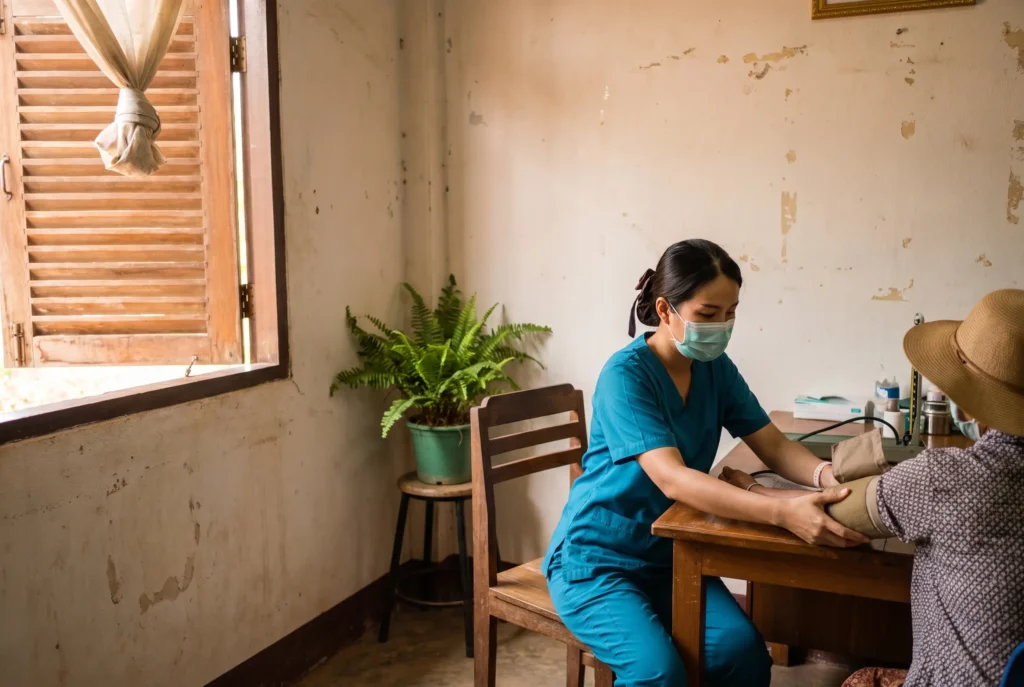
A fever at home is usually a virus and usually needs nothing. A fever in the tropics is a question that deserves an answer, because several of the possibilities look identical at the start and are treated completely differently. Fever treatment in Railay begins with working out what you have rather than reaching for the nearest painkiller.
What counts, and when to act
A temperature above 38C is a fever. Above 39C is high, and above 40C needs attention regardless of what else is happening.
In Krabi, come in if a fever lasts more than two days, or immediately if it comes with severe headache, neck stiffness, a rash that does not fade under pressure, confusion, difficulty breathing, severe abdominal pain, or any bleeding.
The two-day rule exists because that is the point where the harmless explanations start running out. Most viral fevers are settling by then; the ones that are not are the ones worth identifying.
The list of things it might be
Dengue is the one that matters most here, and it is common in Krabi. Sudden high fever, headache behind the eyes, and deep bone pain.
Then bacterial infections — chest, urinary, skin. A urinary tract infection produces fever with burning on urination. Cellulitis produces fever with a spreading red area, sometimes from a small cut you had forgotten about.
Also: ordinary viral illness, gastroenteritis, ear and sinus infections, strep throat, and occasionally typhoid or leptospirosis. Malaria is not a meaningful risk in this area, though it is worth mentioning if you have travelled from a border region.
Why we test rather than guess
Because the treatment decisions diverge sharply and the early symptoms do not.
A full blood count and a dengue test take fifteen to thirty minutes here and answer most of the question. White cells suggest bacterial versus viral. Platelets identify dengue and, more importantly, track it.
And there is a specific hazard in guessing. If this is dengue, ibuprofen and aspirin are dangerous — they impair clotting when platelets are already falling. Someone treating what they assume is flu with ibuprofen is doing precisely the wrong thing, and a fifteen-minute test prevents it.
What to do while you wait
Paracetamol, at the correct dose and correct spacing, is the right first move. It is safe in every cause of fever on the list, which is more than can be said for the alternatives.
Fluids matter more than people expect. Fever raises your requirement substantially, and this climate raises it further. Oral rehydration salts beat plain water when you have been sweating heavily.
Cool rather than cold. Tepid sponging, light clothing, a fan. Cold baths and ice cause shivering, which generates heat and raises the core temperature — the opposite of the intention.
Do not try to abolish the fever entirely. A raised temperature is part of how your immune system responds, and the aim of paracetamol is to make you comfortable enough to drink and sleep, not to force the thermometer back to normal. Chasing the number leads people to double doses and stack medications, which is how a manageable illness acquires a second problem in the form of liver strain.
Keep a note of the readings and the times. On a fever that runs several days, the shape of the curve — whether it is climbing, plateauing or breaking — tells us considerably more than whatever it happens to be at the moment you walk in.
Fever in children
Children run higher fevers than adults for more trivial reasons, so the number matters less than how they are behaving.
A child who is drinking, alert between temperature spikes and still interested in something is usually manageable at home. A child who is drowsy, floppy, not passing urine, refusing all fluids, breathing fast, or has a rash that does not blanch when pressed needs to be seen now.
Any fever in a baby under three months should be assessed the same day without exception. And a parent saying their child is simply not themselves is real clinical information — we treat it as such rather than waiting for a thermometer to agree.
The peninsula problem, again
Fever tends to worsen in the evening, which is precisely when the boats stop.
That makes the calculation different from a mainland town. Being assessed at seven in the evening, when the answer might be reassurance, is a much better position than deciding at one in the morning that you need a hospital and finding there is no way to reach one until dawn.
If a fever is climbing rather than settling as the afternoon goes on, come in that afternoon. If it is already late, message us — see urgent medical care.
Fever after you leave
Incubation periods mean a fever can appear after you have gone home, and doctors in cold countries do not always think of tropical illness.
Dengue appears within two weeks of exposure. Typhoid can take up to three. Malaria, if you have been to a risk area, can appear months later.
Tell any doctor you see that you have been in Southeast Asia, and say it early in the conversation rather than as an afterthought. It changes what they test for. If you were treated here, the English medical report you left with tells them exactly what was already ruled out.
Frequently asked questions
When should I worry about a fever?
Above 40C, lasting more than two days, or at any point with severe headache, neck stiffness, confusion, a non-blanching rash, breathlessness or bleeding.
Can I take ibuprofen?
Not until dengue has been excluded. Paracetamol is safe in all the likely causes; ibuprofen is not.
How fast can you tell me what it is?
A dengue test and full blood count take about fifteen to thirty minutes, in the same visit.
Should I sponge with cold water?
Tepid, not cold. Cold causes shivering, which generates heat and raises core temperature.
Do I need antibiotics for a fever?
Only if it is bacterial, which is a minority of cases. That is what the blood count helps establish.
My child has a fever — how urgent is it?
Judge behaviour over the number. Drowsy, floppy, not drinking, not passing urine, or a rash that does not fade means now. Any fever under three months of age means the same day.
Can a doctor come to me?
Yes — a doctor resort visit, which suits anyone too unwell to walk in this heat.
Who treats you here, and who is behind them
The clinic on Railay is run by experienced English-speaking nurses. Behind them sits Doctor Ao Nang Takecare Medical Clinic in Ao Nang, which Takecare Clinic Railay works together with as one service rather than two businesses: shared doctors, shared records, shared treatment plans. In practice that means a doctor is pulled in the moment your case needs one — to review it, to prescribe, or to come across to the peninsula in person. If you later cross to the mainland, whoever sees you is already holding your notes and you are not starting the story again. It also means the second opinion that would otherwise cost you a boat and half a day costs a phone call.
Getting seen
Opening hours are 8am–10pm daily. Outside them we are still reachable 24 hours by phone, WhatsApp and Line, so when something happens at eleven at night the right move is to message us, not to lie awake deciding whether it can wait. No appointment is needed at any point — walk in, or reach us on +66 81 718 9080, WhatsApp or Line. If you would rather not move, ask for a doctor resort visit and we will come to you. And if this turns out to be something the peninsula cannot handle, that call is also how the boat and the hospital transfer start moving.