Sinus infection treatment in Railay
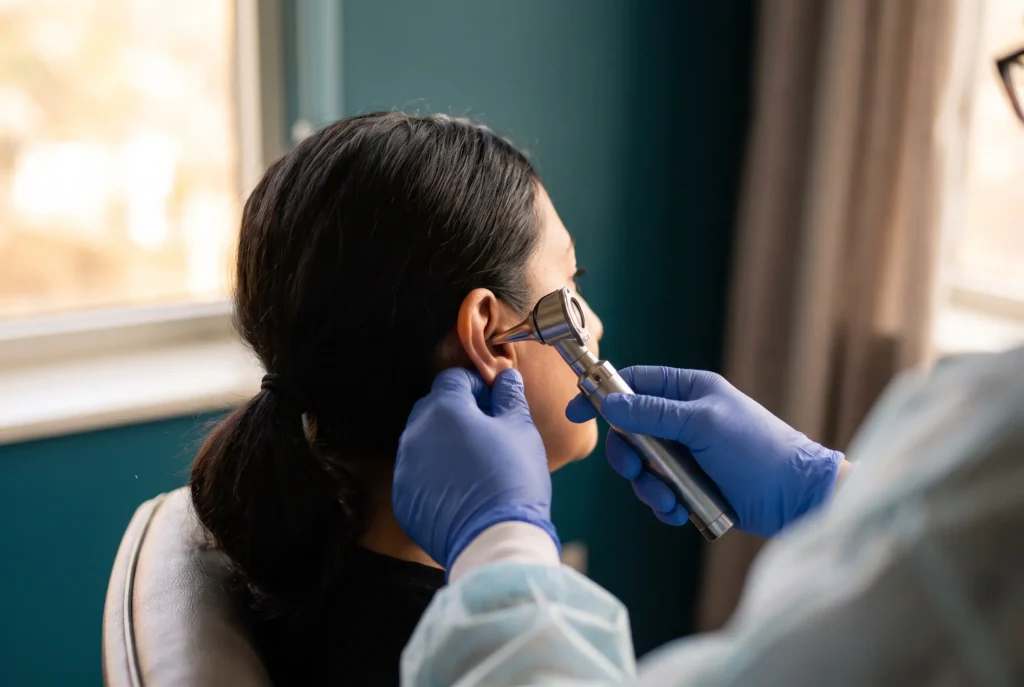
The pressure sits behind your cheekbones and sharpens when you lean forward. One nostril is blocked, and there is a dull ache in your upper teeth that is not dental. Flying, diving and weeks of air conditioning all set this off. Sinus infection treatment in Railay starts by working out whether this is viral, bacterial, or simply pressure that never equalised.
What it feels like
The usual picture:
- Pressure or pain across the cheeks, forehead or behind the eyes
- A blocked nose, typically worse on one side
- Thick yellow or green discharge
- Reduced sense of smell
- Aching in the upper back teeth
- Pain that clearly worsens on bending forward
Coloured discharge does not mean bacterial infection, despite near-universal belief to the contrary. Viral sinusitis produces green mucus perfectly well, and colour alone is a poor reason to take antibiotics.
Flying and diving both trigger it
Both change the air pressure around sinuses that cannot equalise. On a flight, a blocked sinus produces intense pain on descent as the differential builds with nowhere to go.
Diving does the same with far more force, and a blocked sinus can bleed under pressure. If your nose is blocked, do not dive — the schools around Ao Nang and Ton Sai see this constantly. Using a decongestant to force your way through a dive is a poor plan, because if it wears off at depth the reverse block on ascent is worse and can injure the sinus lining.
Deep water soloing at Tonsai contributes in a smaller way. Repeated impacts and water forced up the nose irritate a lining that is already inflamed.
When antibiotics genuinely help
Most sinus infections are viral and settle within seven to ten days on their own.
They are worth considering when symptoms persist beyond ten days without improving, when they are severe with fever above 39C and thick discharge for several consecutive days, or when you clearly improve and then get worse again.
That last pattern — better, then worse — is the single most reliable indicator of a bacterial infection developing on top of a virus, and it is more useful than counting days on a calendar.
What actually clears the blockage
Saline nasal irrigation is the most effective thing available and it is badly underused. Rinsing with a saline sachet and clean water twice a day washes out mucus and reduces swelling, and it outperforms most sprays.
Use bottled or boiled water for it rather than tap water — that matters more here than at home, and it is a genuine safety point rather than fussiness.
A steroid nasal spray reduces inflammation over several days and needs consistent use to work. Decongestant sprays work fast but must not be used beyond three days, or congestion rebounds worse than it started.
And turn the air conditioning up. Cold dry air keeps the nasal lining inflamed and is very often the underlying cause rather than an aggravating factor. A blocked nose is also a common reason for a sore throat, because it forces mouth-breathing all night.
Warning signs that mean hospital
Rare, but serious, because the sinuses sit immediately beside the eye and the brain. Go immediately for:
- Swelling or redness around the eye
- Double vision, or difficulty moving the eye
- Severe headache with neck stiffness
- Confusion or drowsiness
- Swelling across the forehead
Anything involving the eye is an emergency rather than something to sleep on — and from here that means a boat, so the decision has to be made early. See evacuation and hospital transfer.
Sinus pain or toothache?
The upper back teeth sit directly beneath the maxillary sinuses, and their nerve roots run so close to the sinus floor that infection in one is routinely felt in the other. That matters on Railay, where the nearest dentist is a boat ride away and getting it wrong costs a wasted day.
Sinus pain affects several teeth at once rather than one, worsens on bending forward, comes with nasal blockage and reduced smell, and eases as the congestion clears. Dental pain is usually one identifiable tooth, is often worse with hot or cold, and does not care what your nose is doing.
If a single tooth is exquisitely tender to tap, or the gum beside it is swollen, that is dental. Where it is genuinely unclear, treating the sinus for a week is reasonable — if the pain resolves along with the congestion, the question has answered itself.
Stopping it happening again
Most travellers who get this here get it more than once, because the cause is still in the room with them.
Set the air conditioning warmer, point it away from the bed, and put a bowl of water out overnight. Rinse with saline daily rather than only when blocked. Stay hydrated, since thin mucus drains and thick mucus does not.
If you are diving, do not book consecutive days when you already have a cold coming, and give a blocked sinus a full clear day after it settles before descending again. The lining takes longer to recover than the symptoms suggest.
The long-haul flight in is worth planning for as well, since that is where a great many of these start. Cabin air is drier than almost anywhere on the ground, and eleven hours of it leaves the nasal lining parched and inflamed before you have even arrived. Drink considerably more water than feels necessary on the flight, skip the alcohol, and use a saline spray every couple of hours — it sounds excessive and it is the difference between arriving fresh and arriving with a nose that is already in trouble.
Frequently asked questions
How long does a sinus infection last?
Most are viral and settle within seven to ten days. Beyond that without improvement is worth assessing.
Can I dive with a sinus infection?
No. You will not equalise, and forcing it risks barotrauma and bleeding. Wait until the blockage has fully cleared.
Can I fly?
You can, but it will hurt on descent. Use a decongestant spray about thirty minutes before landing, swallow and yawn frequently, and stay hydrated.
Is green mucus proof I need antibiotics?
No. Viral infections produce green and yellow mucus routinely. Duration and the improve-then-worsen pattern matter far more than colour.
Why do I get this every trip to Thailand?
Almost always the air conditioning. Cold, dry, recirculated air inflames the nasal lining. Warmer settings and daily saline prevent most cases.
What water should I use for nasal rinsing?
Bottled or boiled and cooled. Not tap water — that is a genuine safety point, not caution for its own sake.
Can a doctor come to me?
Yes. A doctor resort visit can assess you and bring medication, though a persistent one-sided blockage is better examined at the clinic.
Who treats you here, and who is behind them
The clinic on Railay is run by experienced English-speaking nurses. Behind them sits Doctor Ao Nang Takecare Medical Clinic in Ao Nang, which Takecare Clinic Railay works together with as one service rather than two businesses: shared doctors, shared records, shared treatment plans. In practice that means a doctor is pulled in the moment your case needs one — to review it, to prescribe, or to come across to the peninsula in person. If you later cross to the mainland, whoever sees you is already holding your notes and you are not starting the story again. It also means the second opinion that would otherwise cost you a boat and half a day costs a phone call.
Getting seen
Opening hours are 8am–10pm daily. Outside them we are still reachable 24 hours by phone, WhatsApp and Line, so when something happens at eleven at night the right move is to message us, not to lie awake deciding whether it can wait. No appointment is needed at any point — walk in, or reach us on +66 81 718 9080, WhatsApp or Line. If you would rather not move, ask for a doctor resort visit and we will come to you. And if this turns out to be something the peninsula cannot handle, that call is also how the boat and the hospital transfer start moving.