Sore throat treatment in Railay
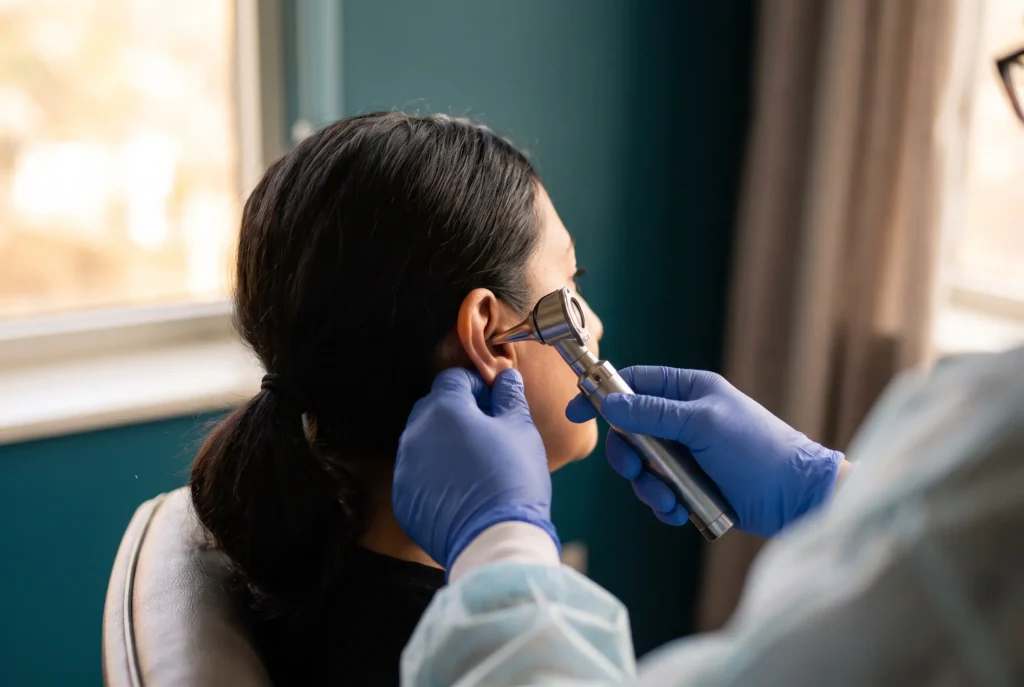
Most sore throats are viral and get better on their own, and antibiotics do nothing for them except cause side effects. A minority are bacterial and genuinely benefit from treatment. Sore throat treatment in Railay is about telling those apart properly rather than guessing — which takes a look, a few questions, and sometimes a swab.
Viral or bacterial: the signs that actually help
Viral throats usually arrive with company — a runny nose, a cough, sneezing, hoarseness. They come on gradually and ease over several days.
Strep throat behaves differently: sudden onset, pain severe enough to make swallowing difficult, fever, swollen tender glands in the neck, white patches on the tonsils, and characteristically no cough at all.
That last detail carries more weight than people expect. A cough points strongly away from strep. The presence of a cough with a sore throat is one of the better arguments against antibiotics.
Why it matters to get this right
Untreated strep can occasionally lead to rheumatic fever, which damages heart valves, and to kidney complications. Those are rare but serious, and they are the reason strep is treated rather than ignored.
On the other side, antibiotics for a viral throat give you no benefit and a real chance of diarrhoea, thrush and a disturbed gut — which in a country where travellers diarrhoea is already likely is a poor trade.
We can swab where the picture is uncertain. Where it is obviously viral, we will say so and treat the symptoms rather than writing a prescription to seem helpful.
The air conditioning problem
A large share of sore throats we see here have no infection behind them at all.
Cold, dry, recirculated air blowing over you for eight hours overnight dries the throat lining, and you wake with a raw throat that improves through the day and returns the next morning. That pattern — worst on waking, better by lunchtime — is close to diagnostic.
Add a blocked nose from sinus congestion forcing you to mouth-breathe all night, and it gets worse. Set the temperature higher, point the unit away from the bed, and put a bowl of water in the room. That fixes more sore throats here than any medication.
What actually helps the pain
Salt water gargling, which is old advice because it works — half a teaspoon in a glass of warm water, several times a day.
Paracetamol or ibuprofen at proper doses. Ibuprofen is particularly effective for throat pain because so much of it is inflammation, though not if there is any question of dengue. Anaesthetic lozenges and sprays help temporarily. Honey genuinely helps, and warm drinks help more than cold for most people.
Sleep matters. So does not smoking, and not spending the evening shouting over music in a bar, which is a factor here more often than anyone admits.
Hydration is the underrated one. A dry throat hurts more than a wet one, and in this heat most people with a sore throat are drinking less than usual precisely because swallowing is unpleasant — which makes it worse the following day. Cold water, ice lollies and fruit ice all count, and if swallowing is genuinely painful they are easier to get down than warm drinks.
Signs that need attention today
Come in without waiting for any of these:
- Difficulty breathing, or noisy breathing
- Inability to swallow your own saliva, or drooling
- Severe one-sided pain with a muffled voice
- Trouble opening your mouth fully
- A swollen neck with high fever
- A rash alongside the sore throat
One-sided pain with a muffled voice suggests a quinsy — an abscess beside the tonsil — which needs draining rather than tablets. Anything affecting breathing or swallowing is urgent, and on this peninsula that means calling early rather than waiting to see how the night goes.
Glandular fever, and the trip-ruining diagnosis
Worth considering in younger travellers with a severe sore throat, big neck glands and profound tiredness that outlasts everything else.
It is viral, so antibiotics do nothing — and amoxicillin given for it commonly causes a dramatic rash, which is a frequent way the diagnosis gets made retrospectively. A blood test can suggest it.
The reason it matters here is the spleen. Glandular fever enlarges it, and an enlarged spleen can rupture with impact. That rules out climbing, bouldering and deep water soloing for several weeks, which is unwelcome news on a climbing trip but considerably better than the alternative.
How long to give it
Most viral sore throats peak around day two or three and settle within a week.
Come in sooner if it is severe from the start, if there is high fever, if swallowing is genuinely difficult, or if it is getting worse rather than better after three days.
And come in if it simply will not go. A sore throat lasting more than two weeks deserves a proper look rather than another packet of lozenges, particularly if it is one-sided or comes with voice changes.
If you are working a season here, the recurring version is worth mentioning too. Bar and restaurant staff who spend every night talking over music, sleeping in air conditioning and then starting again the next afternoon often have a throat that never fully recovers between shifts. That is not an infection to keep treating; it is a pattern to interrupt, and the fixes are dull but effective — warmer air conditioning, water within reach through the shift, and one genuinely quiet evening a week.
Frequently asked questions
Do I need antibiotics for a sore throat?
Usually not. Most are viral. Antibiotics help strep throat, which is a minority — and a cough alongside points away from strep.
Can you test for strep?
Yes, we can swab where the picture is uncertain rather than guessing either way.
Why do I get a sore throat every morning here?
Almost always the air conditioning. Cold dry air overnight, worse if a blocked nose is making you mouth-breathe. Set it warmer and point it away from the bed.
What helps the pain most?
Salt water gargles, paracetamol or ibuprofen, anaesthetic lozenges, honey and warm drinks. Unglamorous and effective.
When is a sore throat an emergency?
Difficulty breathing, inability to swallow saliva, drooling, or severe one-sided pain with a muffled voice. Those need seeing immediately.
Could it be glandular fever?
Possible with severe pain, large neck glands and heavy fatigue. A blood test can suggest it — and it means no climbing for several weeks because of the spleen.
How much does treatment cost?
A consultation is inexpensive. A swab or blood test is quoted separately before it is done.
Who treats you here, and who is behind them
The clinic on Railay is run by experienced English-speaking nurses. Behind them sits Doctor Ao Nang Takecare Medical Clinic in Ao Nang, which Takecare Clinic Railay works together with as one service rather than two businesses: shared doctors, shared records, shared treatment plans. In practice that means a doctor is pulled in the moment your case needs one — to review it, to prescribe, or to come across to the peninsula in person. If you later cross to the mainland, whoever sees you is already holding your notes and you are not starting the story again. It also means the second opinion that would otherwise cost you a boat and half a day costs a phone call.
Getting seen
Opening hours are 8am–10pm daily. Outside them we are still reachable 24 hours by phone, WhatsApp and Line, so when something happens at eleven at night the right move is to message us, not to lie awake deciding whether it can wait. No appointment is needed at any point — walk in, or reach us on +66 81 718 9080, WhatsApp or Line. If you would rather not move, ask for a doctor resort visit and we will come to you. And if this turns out to be something the peninsula cannot handle, that call is also how the boat and the hospital transfer start moving.