Traveller’s diarrhoea treatment in Railay
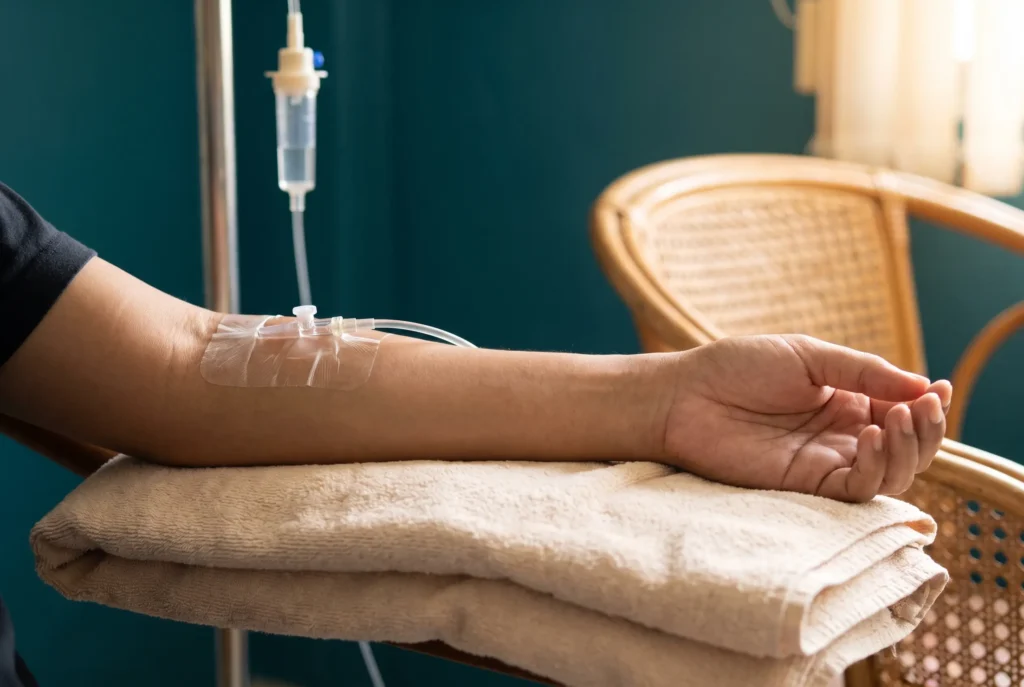
The most common illness in travellers, and the one most likely to cost you a day of a trip you paid a lot for. Travellers diarrhoea treatment in Railay comes down to rehydration done properly, and to knowing which of the available medications helps and which of them makes things worse in your particular case.
What it is and why it happens
Three or more loose stools in a day, usually with cramping, urgency, and sometimes nausea or a mild fever. It typically starts in the first week somewhere new.
The cause is usually bacterial — enterotoxigenic E. coli most often, then Campylobacter, Salmonella and Shigella. Viruses and parasites account for the rest.
It is not about hygiene standards being poor so much as being unfamiliar. Local residents eat the same food without trouble because their gut flora has met these organisms before. Yours has not, which is why it is travellers who get it and not the cook.
Rehydration, and doing it correctly
This is the treatment. Everything else is optional.
Oral rehydration salts contain the specific ratio of glucose and sodium that lets the gut absorb water even while it is inflamed — glucose actively drags sodium across the gut wall, and water follows. That is why ORS works when plain water does not, and it is not marketing.
Sports drinks are a poor substitute — too much sugar, not enough sodium. Coconut water is decent for potassium but light on sodium. Proper sachets cost almost nothing at any pharmacy here, and it is worth carrying a few in a climbing bag as a matter of course.
Aim to replace what you are losing rather than a fixed amount, and keep sipping steadily rather than drinking a lot at once.
Which medication, and when
Loperamide slows the gut and is genuinely useful for a long boat journey or when you simply need to function for a few hours. It treats the symptom, not the cause.
It should be avoided with fever above 38.5C or blood in the stool, where the infection is invasive and trapping it inside is unhelpful. That rule is worth remembering because it is exactly the situation in which people most want to take it.
Antibiotics are reserved for moderate to severe illness, particularly with fever or blood. Azithromycin is generally preferred in Southeast Asia because Campylobacter here is widely resistant to ciprofloxacin. Taking leftover antibiotics from home for mild diarrhoea is a poor idea — it does little, and it disturbs gut flora that is already struggling.
When this is not ordinary travellers diarrhoea
Come in without waiting if there is blood or mucus in the stool, fever above 38.5C, severe abdominal pain, vomiting that prevents any fluid intake, or signs of significant dehydration.
Also come in if it simply will not stop. Anything lasting beyond a week, or that keeps returning, raises the possibility of a parasite — Giardia is the usual suspect and produces a distinctive pattern of bloating, foul-smelling stools and sulphurous burps. It needs a specific treatment rather than waiting.
Weight loss, or diarrhoea that persists for weeks after everything else has settled, deserves proper investigation rather than acceptance.
Testing, and when it is worth doing
Most cases need no testing at all and settle before a result would arrive.
Where it is worth doing: prolonged symptoms, blood in the stool, high fever, or an illness that has not responded to initial treatment. A stool sample can identify bacteria and parasites, and blood tests show how dehydrated you are and whether inflammatory markers suggest something invasive.
Samples go to Krabi for analysis, so results take longer than our same-visit bloods. We will tell you honestly whether waiting for one changes what we would do, because frequently it does not.
Being ill on a peninsula
Two practical problems here that do not exist in a town.
First, boats. If you are losing fluid rapidly and the last boat has gone, you cannot simply take yourself to a hospital. That is an argument for coming in early rather than seeing how the night goes — being assessed at 8pm and told it is fine costs you nothing.
Second, walking. Everything on Railay is a walk in the heat, which is the last thing you want when dehydrated. If you cannot face it, ask for a doctor resort visit and stay where the bathroom is.
Prevention that is actually worth doing
Bottled or filtered water for drinking and brushing teeth. Commercially made ice, which is standard in Thailand, is fine.
Hot, freshly cooked food. Busy places over quiet ones. Fruit you peel yourself over pre-cut. Caution with buffets, lukewarm food and raw shellfish — and rather more caution with seafood here than on the mainland, because everything on Railay has spent longer in transit.
Wash your hands, particularly after climbing. Chalk bags are shared, holds are shared, and hands go to mouths constantly at the crag. It is an under-appreciated route for exactly these organisms, and hand gel in a climbing bag is a sensible habit.
The other thing worth doing is not treating your first two days as a test of your constitution. Most cases start in the first week, and a gut that has just arrived from Europe copes better if it meets unfamiliar organisms gradually rather than in a single ambitious seafood dinner on the night you land. Ease into it, and save the adventurous eating for once you have found your footing.
Frequently asked questions
How long does it usually last?
Three to five days untreated. Antibiotics shorten it where they are appropriate, but most cases do not need them.
Can I take Imodium?
Yes for watery diarrhoea without fever or blood, and it is genuinely useful before a boat. Avoid it if there is fever or blood.
Are the ice cubes safe?
Generally yes — commercial ice in Thailand is made with treated water. Tap water is the thing to avoid.
When do I need antibiotics?
Moderate to severe illness, especially with fever or blood in the stool. Azithromycin is usually the right choice here.
What if it lasts more than a week?
Come in. Prolonged symptoms raise the possibility of a parasite such as Giardia, which needs specific treatment.
Should I keep eating?
Yes, when you feel able. Plain food helps the gut lining recover faster than starving does.
Do I need a stool test?
Only for prolonged, bloody or severe illness. Most cases resolve before a result would come back.
Who treats you here, and who is behind them
The clinic on Railay is run by experienced English-speaking nurses. Behind them sits Doctor Ao Nang Takecare Medical Clinic in Ao Nang, which Takecare Clinic Railay works together with as one service rather than two businesses: shared doctors, shared records, shared treatment plans. In practice that means a doctor is pulled in the moment your case needs one — to review it, to prescribe, or to come across to the peninsula in person. If you later cross to the mainland, whoever sees you is already holding your notes and you are not starting the story again. It also means the second opinion that would otherwise cost you a boat and half a day costs a phone call.
Getting seen
Opening hours are 8am–10pm daily. Outside them we are still reachable 24 hours by phone, WhatsApp and Line, so when something happens at eleven at night the right move is to message us, not to lie awake deciding whether it can wait. No appointment is needed at any point — walk in, or reach us on +66 81 718 9080, WhatsApp or Line. If you would rather not move, ask for a doctor resort visit and we will come to you. And if this turns out to be something the peninsula cannot handle, that call is also how the boat and the hospital transfer start moving.