Ear Wax Removal in Railay
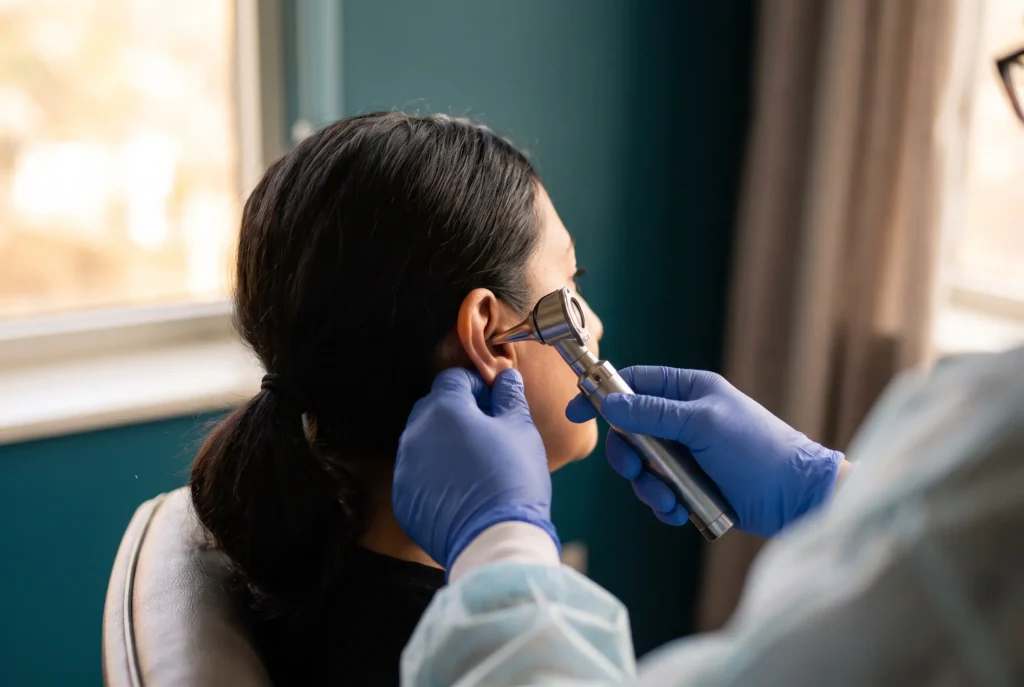
A week of swimming, then one ear goes muffled and stays that way. It is rarely an infection at that point — it is wax that has swollen with water and sealed the canal. Ear wax removal in Railay takes a few minutes, and the hearing comes back immediately, which makes it one of the more satisfying things we do.
Why this happens so much here
Wax is normally a good thing. It is slightly acidic, mildly antibacterial, and it migrates outward on its own carrying dirt with it. Left alone it manages itself.
Water changes that. Wax absorbs it and swells, and a plug that was sitting harmlessly against the canal wall expands to block it completely. Days of swimming, snorkelling and diving is exactly the pattern that does it.
Earbuds and swimming plugs push wax inward and compact it. Cotton buds do the same, more effectively, which is why the classic history is a blocked ear that got dramatically worse after somebody tried to clean it.
Blocked or infected — they are treated differently
Wax blockage is muffled hearing, a sense of fullness, sometimes mild ringing or a feeling of being underwater. It is not usually painful.
An ear infection hurts, and it hurts in a specific way — pulling the earlobe or pressing the small flap in front of the ear makes you wince sharply. There may be discharge and the pain often keeps people awake.
The distinction matters because syringing an infected ear is the wrong thing to do, and because drops for an infection do nothing for a wax plug. A look with an otoscope settles it in seconds, which is a better use of a few minutes than guessing at the pharmacy.
How removal is done
Softening first. Olive oil or a proprietary wax softener for two or three days makes removal easier, more comfortable and much more likely to work first time. Where somebody is diving tomorrow and cannot wait, we work with what is there.
Then irrigation with warm water at controlled pressure, or removal under direct vision with a fine instrument or suction where irrigation is unsuitable. It takes a few minutes per ear.
It feels strange rather than painful — a rushing sound, a sense of pressure, sometimes brief dizziness because moving water past the eardrum stimulates the balance organ. That passes within a minute or two. Hearing returns immediately, and people are usually startled by how loud the room suddenly is.
When we will not irrigate
Irrigation is not appropriate for everyone, and doing it in the wrong ear causes real harm:
- A perforated eardrum, or a history of one
- Any previous ear surgery, including grommets
- An active infection in the canal or middle ear
- Only one hearing ear
- Recent significant ear trauma or barotrauma
In those cases removal is done under direct vision instead, or referred onward. This is a good reason not to buy a syringing kit and attempt it at your resort — the contraindications are not obvious from the outside, and a perforation you did not know about turns a blocked ear into a serious problem.
Diving, flying and blocked ears
A wax plug interferes with equalising, and dive schools around Ao Nang and Ton Sai see this constantly. If one ear will not clear on descent, do not force it — the pressure has nowhere to go and the eardrum takes the load.
Getting the wax removed before a course is far better than discovering the problem at ten metres. If you are booked to dive and your ear is blocked, come in the day before rather than the morning of, so there is time to soften it if needed.
Flying is less dramatic but the same principle applies on descent. A blocked ear on landing is genuinely painful, and it is entirely preventable.
Keeping ears clear on a beach holiday
Do not use cotton buds. Nothing smaller than your elbow, as the old advice goes, and it is correct — buds remove a little wax from the entrance while compacting far more against the eardrum.
Dry your ears after swimming by tilting your head and letting water run out, then patting the outside dry. A drop of a drying solution, or equal parts white vinegar and rubbing alcohol, helps if you are in the water daily and prone to trouble — though not if there is any chance of a perforation.
If you get blocked ears repeatedly, a few drops of olive oil once a week keeps wax soft and moving. That is a genuinely effective habit and costs almost nothing.
What if it is not wax at all
Sometimes the canal is clear and the hearing is still muffled, which points elsewhere — fluid behind the eardrum after a cold, sinus congestion blocking the Eustachian tube, or barotrauma from a dive that did not equalise cleanly.
Occasionally there is something in the ear that is not wax. Sand is the usual one here; insects happen more often than people would like, and are dealt with rather than left.
Sudden hearing loss in one ear without an obvious cause is not something to wait on — that needs assessment quickly rather than at the end of the holiday. If you cannot get to us, ask about a doctor resort visit.
Frequently asked questions
Does ear wax removal hurt?
No. It feels strange — rushing water, a sense of pressure, sometimes brief dizziness — but it is not painful.
How long does it take?
A few minutes per ear, and the hearing comes back immediately.
Should I soften the wax first?
Ideally yes — olive oil or a wax softener for two or three days makes it much more likely to work first time.
Can I dive afterwards?
Usually the same day, once we have checked the eardrum looks healthy. Removing the plug is exactly what lets you equalise.
Are cotton buds really that bad?
Yes. They remove a little wax from the entrance and compact considerably more against the eardrum. Most severe plugs we see have been made worse this way.
How much does it cost?
It is one of the cheaper procedures we do, and you are told the price before we start.
What if I have had a perforated eardrum?
Tell us. Irrigation is not safe in that case, and removal is done under direct vision instead.
Who treats you here, and who is behind them
The clinic on Railay is run by experienced English-speaking nurses. Behind them sits Doctor Ao Nang Takecare Medical Clinic in Ao Nang, which Takecare Clinic Railay works together with as one service rather than two businesses: shared doctors, shared records, shared treatment plans. In practice that means a doctor is pulled in the moment your case needs one — to review it, to prescribe, or to come across to the peninsula in person. If you later cross to the mainland, whoever sees you is already holding your notes and you are not starting the story again. It also means the second opinion that would otherwise cost you a boat and half a day costs a phone call.
Getting seen
Opening hours are 8am–10pm daily. Outside them we are still reachable 24 hours by phone, WhatsApp and Line, so when something happens at eleven at night the right move is to message us, not to lie awake deciding whether it can wait. No appointment is needed at any point — walk in, or reach us on +66 81 718 9080, WhatsApp or Line. If you would rather not move, ask for a doctor resort visit and we will come to you. And if this turns out to be something the peninsula cannot handle, that call is also how the boat and the hospital transfer start moving.