Prescription Refill in Railay
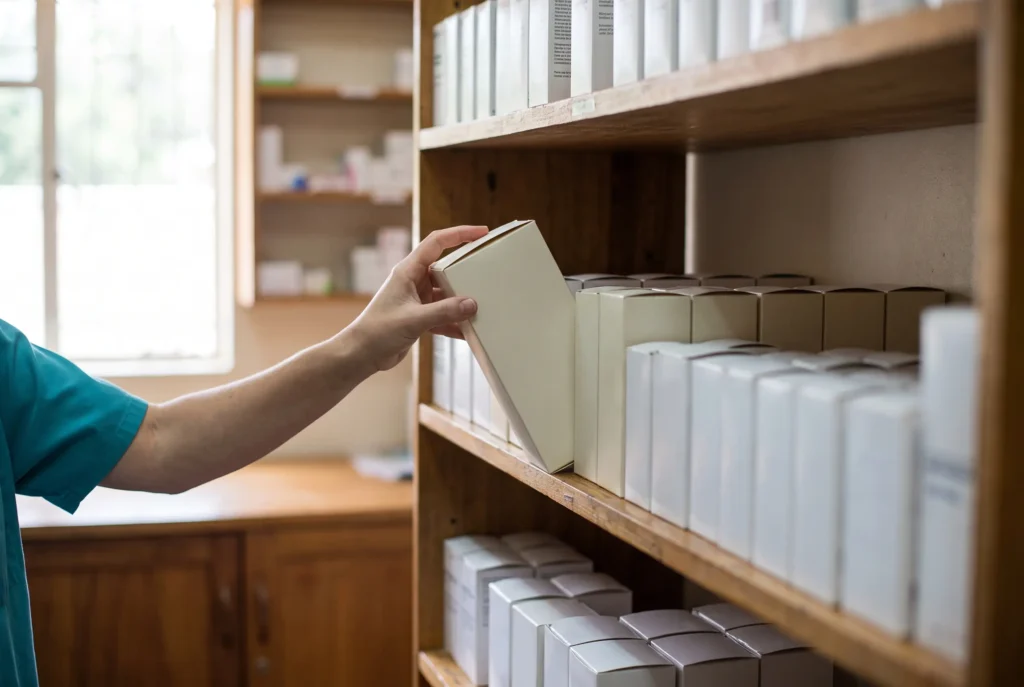
Medication gets lost in transit, soaked when a dry bag turns out not to be dry, left on a bedside table in Bangkok, or simply runs out because a trip got extended. None of that is a crisis, and none of it requires flying home. Prescription refill in Railay covers most regular medications, and Thai pharmacy rules make this considerably easier than travellers expect.
What we can replace
Most ordinary long-term medication: blood pressure tablets, cholesterol treatment, diabetes medication including insulin, thyroid replacement, asthma inhalers, contraception, antidepressants and anxiety medication, epilepsy medication, and blood thinners.
Also the things people run out of unexpectedly on a long trip — antihistamines, reflux medication, migraine treatment, and reliever inhalers used more than expected in this humidity.
Bring the box or a photograph of it if you possibly can. Brand names differ between countries and the generic name on the packaging removes all guesswork. A photograph on your phone is entirely sufficient.
Thai brand names are not your brand names
The active ingredient is usually identical and the box looks nothing like the one at home, which unsettles people more than it should.
What you want is the generic name — atorvastatin, metformin, levothyroxine, sertraline — rather than the trade name you know. If you only know the trade name, we can nearly always identify the equivalent, but it takes longer and occasionally requires checking.
Dose formats sometimes differ too. Where a strength is not available here, we will explain how to reach the same daily dose with what is, rather than substituting something different without saying so.
What needs more than a conversation
Controlled medications are tightly regulated in Thailand, and this is where travellers hit walls.
Strong opioid painkillers, ADHD stimulants such as methylphenidate, and benzodiazepines are either unavailable, require specialist prescription, or are outright controlled. Some medications legal at home are classified as narcotics here, and possessing them without documentation is a genuine legal problem rather than a paperwork one.
If you take anything in those categories, travel with your original prescription and a letter from your prescribing doctor. If you have run out, tell us early — the answer may involve a specialist in Krabi Town rather than the peninsula, and that takes time to arrange.
Medication that needs monitoring
Some prescriptions are not simply reissued, because the dose depends on numbers rather than history.
Warfarin needs INR testing. Thyroid replacement needs periodic thyroid function tests. Several diabetes medications need kidney function checked. Lithium needs levels. We can run most of those here — see blood tests — and issue accordingly.
That is not obstruction. A person on a stable dose for years is generally fine, but reissuing a dose blindly to somebody whose kidney function has drifted in a hot climate is how a straightforward refill becomes a problem.
Insulin and the heat
Insulin deserves its own note, because the peninsula is hard on it.
Unopened insulin needs refrigeration. In use, most types tolerate room temperature for about a month — but room temperature here means well above what the manufacturer had in mind, and a bungalow without air conditioning is not room temperature. Insulin that has been hot is less effective, and there is no reliable way to tell by looking.
Keep it in a fridge where you can, use a cooling wallet when travelling and on boats, never leave it in direct sun, and never freeze it. If your control has become erratic and nothing else has changed, heat-damaged insulin is the first thing to suspect.
Contraception, and the practical questions
The combined pill, progesterone-only pill and emergency contraception are all available. Bring the packet if you have it, since formulations vary.
Two things travellers ask about constantly. Time zones: take it at the same actual moment rather than the same clock time, or shift it gradually — a few hours either way matters little for the combined pill and matters considerably for the progesterone-only pill, which has a narrow window.
And vomiting. If you vomit within two or three hours of taking it, it may not have been absorbed, which on a trip involving food poisoning is a real scenario. Treat it as a missed pill and use additional protection.
How to make this easy on yourself
Photograph every medication box before you travel, front and back, and keep the photographs somewhere that is not only your phone.
Carry medication in hand luggage rather than checked bags, keep it in the original packaging, and split it between two bags if you can — half your supply lost is an inconvenience, all of it lost is a problem. On boats, assume anything not in a genuinely waterproof container will get wet.
Bring more than the trip length. Trips get extended, boats get cancelled in bad weather, and a week of buffer costs nothing. If you cannot get to the clinic, a doctor resort visit can bring medication to you.
One more thing that catches people on a peninsula: heat and damp destroy tablets faster than anyone expects. Blister packs cope reasonably well; loose tablets in a pill organiser sitting in a humid bungalow do not, and neither do dissolvable or effervescent forms, which absorb moisture from the air and crumble. Keep medication in its original sealed packaging until the day you take it, and store the box somewhere dry rather than on a windowsill.
Frequently asked questions
Can you replace medication I lost?
Most ordinary long-term medication, yes. Bring the box or a photograph of it if you can.
What if I only know the brand name from home?
We can usually identify the Thai equivalent. The generic name makes it faster, which is why a photograph of the box helps.
Can you prescribe strong painkillers or ADHD medication?
Those are controlled in Thailand and often need a specialist. Tell us early, travel with your original prescription, and expect it to take longer than a routine refill.
Do I need a blood test first?
For some medications, yes — warfarin, thyroid replacement and several diabetes drugs need monitoring. We can run those here.
How much does a refill cost?
A consultation plus the medication, both quoted before anything is dispensed. Thai medication prices are generally low by international standards.
My insulin has been warm for days. Is it still good?
Possibly not, and there is no way to tell by looking. If your control has become erratic with nothing else changed, replace it.
Can you deliver to my resort?
Medication can be brought as part of a doctor resort visit if you cannot get to the clinic.
Who treats you here, and who is behind them
The clinic on Railay is run by experienced English-speaking nurses. Behind them sits Doctor Ao Nang Takecare Medical Clinic in Ao Nang, which Takecare Clinic Railay works together with as one service rather than two businesses: shared doctors, shared records, shared treatment plans. In practice that means a doctor is pulled in the moment your case needs one — to review it, to prescribe, or to come across to the peninsula in person. If you later cross to the mainland, whoever sees you is already holding your notes and you are not starting the story again. It also means the second opinion that would otherwise cost you a boat and half a day costs a phone call.
Getting seen
Opening hours are 8am–10pm daily. Outside them we are still reachable 24 hours by phone, WhatsApp and Line, so when something happens at eleven at night the right move is to message us, not to lie awake deciding whether it can wait. No appointment is needed at any point — walk in, or reach us on +66 81 718 9080, WhatsApp or Line. If you would rather not move, ask for a doctor resort visit and we will come to you. And if this turns out to be something the peninsula cannot handle, that call is also how the boat and the hospital transfer start moving.