Minor Surgery in Railay
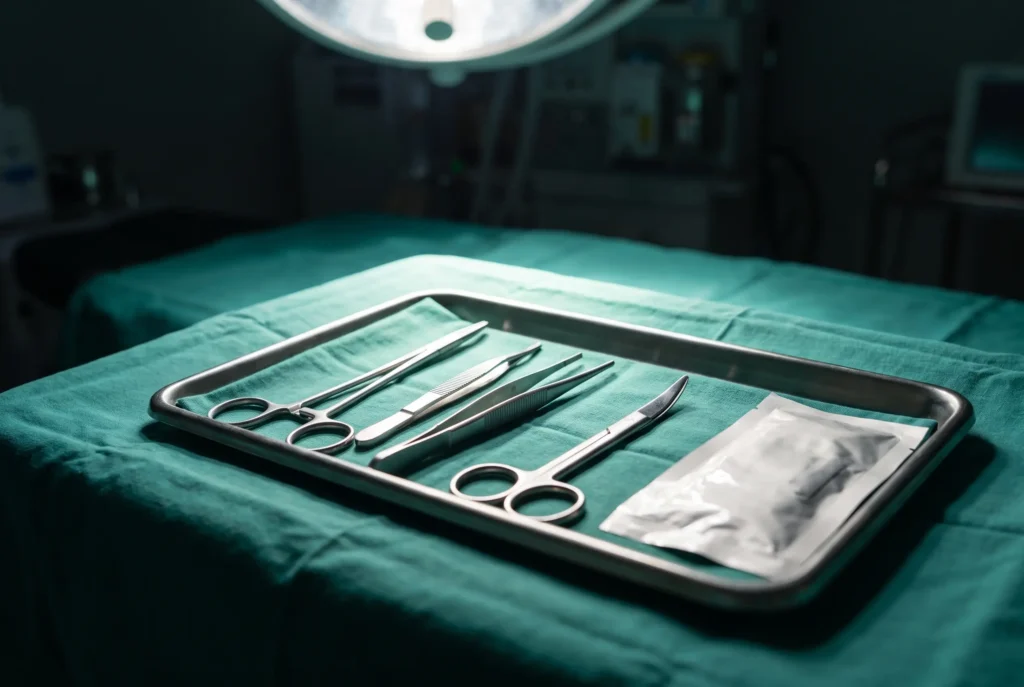
Some problems need something opened, drained or taken out, and they do not improve with tablets and patience. Minor surgery in Railay covers the procedures that can be done properly under local anaesthetic in a clean treatment room — abscess drainage, ingrown toenails, embedded foreign bodies, and the sea urchin spines that arrive here in numbers.
What we do here
Draining abscesses and infected cysts. Removing sea urchin spines, coral fragments, splinters, fish hooks and glass. Treating ingrown toenails, including partial nail removal where the same toe keeps recurring. Removing small skin lesions and infected hair follicles. Repairing wounds that need more than simple closure — see stitches and laceration repair.
All of it under local anaesthetic, in a treatment room with proper lighting, sterile instruments and a sterile field. That last part matters more than the skill involved: the difference between a good outcome and an infected one is usually the environment, not the technique.
Abscesses, and why antibiotics alone fail
An abscess is a walled-off pocket of pus. Antibiotics travel in the bloodstream, and there is no meaningful blood supply inside that pocket — which is why a genuinely abscessed lump can sit there getting larger through a full course of tablets.
The treatment is drainage. The area is numbed, a small incision releases the pus, the cavity is washed out and any internal partitions broken down, and it is then packed so it heals from the inside outward rather than sealing over the top and refilling.
Relief is immediate and dramatic — the pain of an abscess is pressure, and releasing the pressure ends it. Antibiotics come afterwards where there is surrounding infection, not instead.
Why heat and humidity produce so many of them
Blocked hair follicles and sweat glands in constant heat, skin that is damp for weeks, chafing from harnesses and waistbands, and shaving in humid conditions all give bacteria a way in.
Armpits, groin, buttocks and the backs of thighs are the usual sites, which is also why people put off coming in. There is no need for embarrassment — this is ordinary work here, it is dealt with quickly, and nobody comments.
The reason to come early is straightforward. A small abscess drained today is a five-minute procedure and a few days of dressings. The same abscess in four days is larger, more painful, harder to numb properly, and leaves a bigger scar.
Ingrown toenails
Common in travellers, because feet spend weeks damp in flip-flops and sandals, and climbing shoes compress toes hard for hours at a time.
Early on, the nail edge is digging in and the skin is inflamed but not yet infected — that often settles with soaking, correct trimming and a short course of treatment. Once there is pus and proud flesh along the nail fold, it needs a procedure.
That means numbing the toe with a ring block, removing the offending strip of nail, and dressing it. It is well tolerated, it walks out the same day, and the relief is immediate. Where the same toe has done this repeatedly, the nail bed edge can be treated so it does not regrow into the same problem.
Things embedded in you
Sea urchin spines are the local speciality. They are brittle, they break rather than pull, and the superficial ones often need no removal at all — the ones that need attention are those in a joint, in the sole where you are walking on them, or any that are becoming infected.
Coral fragments and limestone grit sit in wounds and are the reason a coral cut turns bad days later. Fish hooks come in reasonably often and have a technique of their own. Glass is the one people most often assume they have got out and have not.
Anything that has been in longer than a day, or that is in a hand, foot or joint, deserves proper examination rather than tweezers at the resort. Digging around at a foreign body without anaesthetic pushes it deeper about as often as it removes it.
What a procedure actually involves
You are told what is going to happen and what it costs before anything starts.
Local anaesthetic goes in first — the part that stings, briefly. Once the area is numb you feel pressure and movement but not pain, and you stay awake and can talk throughout. Most procedures take fifteen to thirty minutes.
Afterwards you leave with a dressing, instructions, pain relief if it is needed, and a date to come back. Most of these need a dressing change the following day, which is quick and inexpensive, and some need packing changed for several days.
What we send across the water
Anything needing general anaesthetic, an operating theatre or imaging. Deep abscesses near joints or on the face close to the eye. Hand injuries where a tendon or nerve may be involved, because those need a surgeon and a proper exploration rather than a treatment room.
Suspected appendicitis and any surgical abdomen goes immediately, as does anything that has spread into the bloodstream. In those cases we stabilise, call ahead, and arrange the boat — see evacuation and hospital transfer.
We will tell you which category you are in early rather than starting something and stopping halfway.
Frequently asked questions
Does it hurt?
The local anaesthetic stings for a few seconds. After that you feel pressure and movement rather than pain.
How much does minor surgery cost?
It depends on the procedure, and you are quoted the whole cost before anything begins.
Can antibiotics fix an abscess instead?
Not on their own. There is no blood supply inside the pus pocket for them to reach. It needs draining, with antibiotics afterwards if the surrounding tissue is infected.
Can I walk afterwards?
For most procedures yes. After a toenail procedure you walk out, though a proper shoe will be uncomfortable for a day or two — plan on flip-flops.
Do I need to get every urchin spine out?
No. Superficial spines are often best left to be absorbed. The ones that need removal are in joints, in the sole of the foot, or becoming infected.
Can I swim after a procedure?
Not while the wound is open or packed. Seawater in a fresh surgical wound is a genuine infection risk on this coast.
Will I need to come back?
Usually once or twice for dressing changes, and for several days if the cavity has been packed. It is quick and cheap each time.
Who treats you here, and who is behind them
The clinic on Railay is run by experienced English-speaking nurses. Behind them sits Doctor Ao Nang Takecare Medical Clinic in Ao Nang, which Takecare Clinic Railay works together with as one service rather than two businesses: shared doctors, shared records, shared treatment plans. In practice that means a doctor is pulled in the moment your case needs one — to review it, to prescribe, or to come across to the peninsula in person. If you later cross to the mainland, whoever sees you is already holding your notes and you are not starting the story again. It also means the second opinion that would otherwise cost you a boat and half a day costs a phone call.
Getting seen
Opening hours are 8am–10pm daily. Outside them we are still reachable 24 hours by phone, WhatsApp and Line, so when something happens at eleven at night the right move is to message us, not to lie awake deciding whether it can wait. No appointment is needed at any point — walk in, or reach us on +66 81 718 9080, WhatsApp or Line. If you would rather not move, ask for a doctor resort visit and we will come to you. And if this turns out to be something the peninsula cannot handle, that call is also how the boat and the hospital transfer start moving.