Allergic reaction treatment in Railay
Most allergic reactions are itchy and alarming rather than dangerous. A small number are genuinely life-threatening, and the difference is not how bad the rash looks — it is whether breathing, swallowing or blood pressure are involved. Allergic reaction treatment in Railay covers both, and on a peninsula with no ambulance the distinction is worth knowing before you need it.
Anaphylaxis: the signs that mean now
Call 1669 and call us at the same time for any of these:
- Swelling of the lips, tongue or throat
- Difficulty breathing, wheezing, or a hoarse voice
- Difficulty swallowing, or a feeling of the throat closing
- Widespread rash together with any of the above
- Dizziness, feeling faint, or collapse
- Vomiting alongside breathing or circulation symptoms
Anaphylaxis needs adrenaline, not antihistamines. If an adrenaline pen is available, use it into the outer thigh immediately — through clothing is fine — and then call. Nobody has ever been harmed by using a pen they turned out not to need.
Lie the person flat with legs raised, unless they are struggling to breathe, in which case let them sit up. Do not stand them up, and do not walk them anywhere.
Why the peninsula changes the arithmetic
There is no ambulance that can reach Railay and no hospital on it. Transfer is a longtail boat and takes the better part of two hours — see evacuation and hospital transfer.
That means the adrenaline you have with you matters more here than almost anywhere. Keep an adrenaline pen on your person rather than in a room safe, and carry two if you have been prescribed two, because a proportion of reactions rebound after the first dose wears off.
It also means telling the people you are travelling with where it is and how to use it. Somebody in anaphylaxis frequently cannot manage it themselves.
Mild and moderate reactions
Far commoner, and manageable. Hives — raised, intensely itchy welts that move around and change shape over hours. Localised swelling. An itchy rash after a new food or medication.
Oral antihistamines are the mainstay, and a non-drowsy one during the day with a sedating one at night works well. A steroid cream helps localised patches, and a short course of oral steroids helps a widespread reaction.
Come in if it is spreading rapidly, if swelling involves the face, if it is not settling over a day or two, or if you simply cannot tell how worried to be. That last one is a legitimate reason and we would rather see you.
What sets people off here
Food is the biggest category, and Thai cooking uses ingredients travellers do not always anticipate. Peanuts and peanut oil are widespread. Shellfish and fish sauce appear in a great many dishes, including ones that look vegetarian. Sesame, soy and cashew are common.
The language barrier is the practical risk. “No peanuts” may be understood as “no visible peanuts” while peanut oil remains in the wok. If you have a serious allergy, carry a written translation card and show it rather than saying it — and be aware that a shared wok makes any assurance approximate.
Then insect stings — see insect bite treatment — and medications, particularly antibiotics and anti-inflammatories. Latex, in gloves and some diving equipment, catches a few people out.
Reactions that are not allergies
Several things get labelled allergic and are not, and the distinction changes the treatment.
Scombroid poisoning comes from histamine in poorly stored fish — usually tuna or mackerel — and produces flushing, headache, palpitations and a peppery taste within an hour of eating. It looks exactly like an allergic reaction, it responds to antihistamines, and it means the fish was badly stored rather than that you are allergic to it. On a peninsula where all seafood arrives by boat, it is worth knowing about.
Heat rash and fungal rashes are frequently assumed to be allergic. So is sea bather eruption, the itchy rash under swimwear from jellyfish larvae.
What we do at the clinic
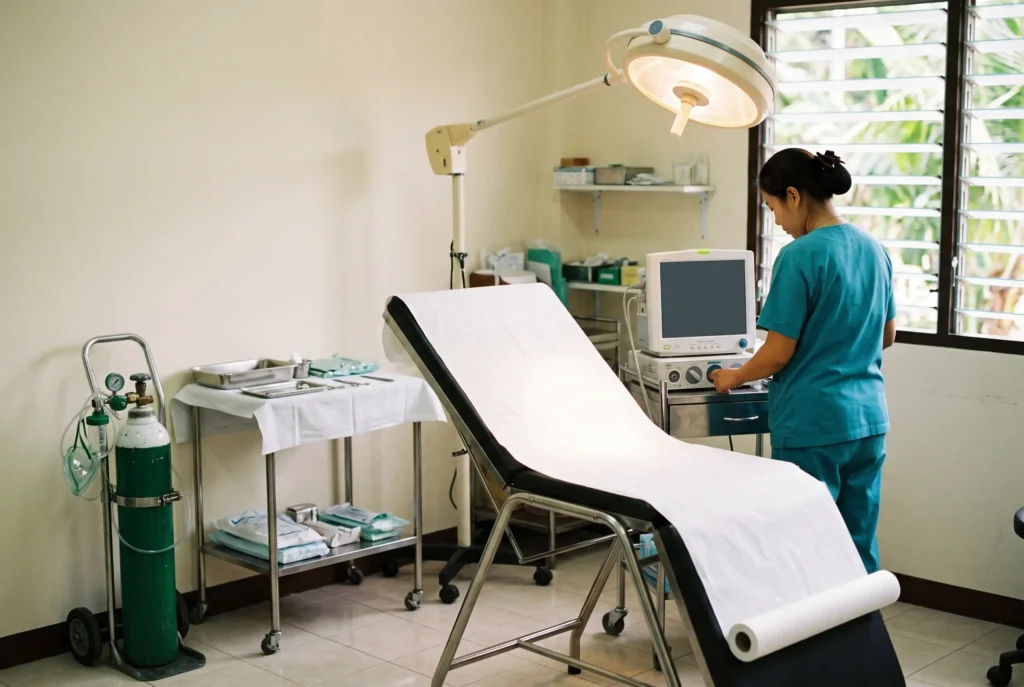
For anaphylaxis: adrenaline, oxygen, IV fluids, antihistamines and steroids, and observation — because reactions can rebound hours after apparently settling. Anyone who has had adrenaline needs monitoring rather than discharge, and on this peninsula that means a decision about whether to observe here or cross to Krabi Town.
For mild and moderate reactions: assessment, antihistamines and steroids as needed, and a clear explanation of what to watch for over the next day.
We will also replace an adrenaline pen you have used, and give you a written record of what happened, which matters for both your insurer and any doctor you see later — see travel insurance claims.
Travelling with a serious allergy
Carry two adrenaline pens, keep them on you, and check the expiry dates before the trip rather than during it. Heat degrades adrenaline, so do not leave a pen in direct sun, in a bag on hot rock, or in a car.
Get a written translation card for your allergen in Thai. Show it at every meal rather than relying on a verbal exchange, and accept that street food and shared woks carry unavoidable uncertainty.
Wear medical identification if your allergy is severe. And tell whoever you are climbing or diving with — on Railay, the person most likely to be standing next to you when it happens is not going to be a medical professional.
Frequently asked questions
When should I use an adrenaline pen?
Any breathing difficulty, throat or tongue swelling, or faintness with a rash. If in doubt, use it — nobody has been harmed by a dose they did not need.
Do antihistamines treat anaphylaxis?
No. They help the rash and itching. Anaphylaxis needs adrenaline, and delay while waiting for antihistamines to work is the main cause of poor outcomes.
Can you replace a used adrenaline pen?
Yes. Come in and we will replace it and give you a written record of the reaction.
How long do hives last?
Individual welts fade within hours, though a bout can come and go for days. Antihistamines control it while it settles.
I reacted to tuna — am I allergic to fish?
Possibly not. Scombroid poisoning from poorly stored fish looks identical and means the fish was mishandled. Worth discussing rather than avoiding fish for life.
How do I explain my allergy in Thai?
Carry a written translation card and show it at every meal. A verbal request is often understood as no visible traces rather than no contact at all.
Is it safe to have a reaction on Railay?
Mild reactions, yes — we treat them here. For anaphylaxis, the honest answer is that transfer takes two hours, which is exactly why carrying your own adrenaline matters more here.
Who treats you here, and who is behind them
The clinic on Railay is run by experienced English-speaking nurses. Behind them sits Doctor Ao Nang Takecare Medical Clinic in Ao Nang, which Takecare Clinic Railay works together with as one service rather than two businesses: shared doctors, shared records, shared treatment plans. In practice that means a doctor is pulled in the moment your case needs one — to review it, to prescribe, or to come across to the peninsula in person. If you later cross to the mainland, whoever sees you is already holding your notes and you are not starting the story again. It also means the second opinion that would otherwise cost you a boat and half a day costs a phone call.
Getting seen
Opening hours are 8am–10pm daily. Outside them we are still reachable 24 hours by phone, WhatsApp and Line, so when something happens at eleven at night the right move is to message us, not to lie awake deciding whether it can wait. No appointment is needed at any point — walk in, or reach us on +66 81 718 9080, WhatsApp or Line. If you would rather not move, ask for a doctor resort visit and we will come to you. And if this turns out to be something the peninsula cannot handle, that call is also how the boat and the hospital transfer start moving.