Monkey and animal bite treatment in Railay
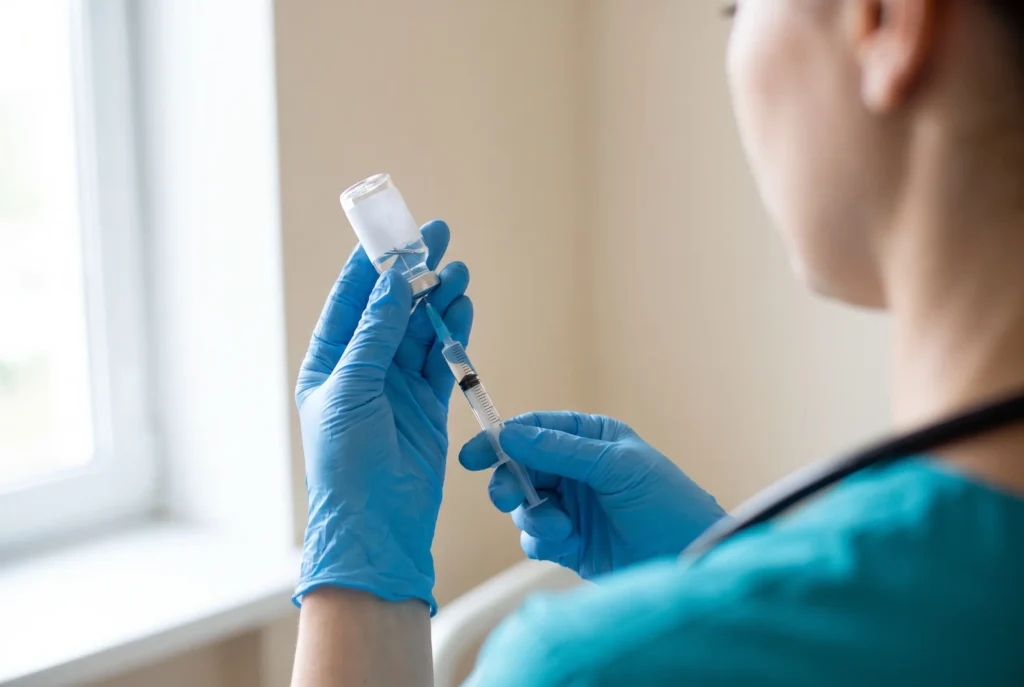
The macaques at Phra Nang are confident, quick and entirely used to people, and they take bags. A grab that breaks skin is not a story to tell over dinner — it starts a clock. Monkey and animal bite treatment in Railay means washing the wound properly, then dealing with three separate questions: rabies, tetanus and bacterial infection.
Wash it for fifteen minutes. Now.
Before anything else, before coming to us, wash the wound with soap and running water for a full fifteen minutes by the clock.
This is not a formality to get out of the way. Rabies virus is fragile outside the body, and prolonged washing with soap physically removes and inactivates a large part of it. It measurably reduces the risk of infection and it is the single most effective thing that happens in the whole sequence.
Then apply antiseptic if you have some, and come in. Do not close the wound, do not bandage it tightly, and do not let anyone stitch it shut before the rabies question has been settled.
What counts as a bite
More than people assume, and the assumption is what causes trouble.
Any bite that breaks skin. Any scratch that draws blood or breaks skin — a monkey grabbing at a bag and catching your forearm counts. Any lick on broken skin, or on the eyes, nose or mouth.
The animal looking perfectly healthy counts for nothing, because an animal can transmit rabies before it appears unwell. Monkeys are the commonest source here; dogs, cats and bats also count, bats especially, since their bites can be small enough to go unnoticed.
The rabies clock
Rabies is effectively always fatal once symptoms appear and entirely preventable if treatment starts in time. That combination is why this is urgent rather than something to consider tomorrow.
Post-exposure vaccination starts here the same day, with doses on day 0, 3, 7 and 14 for anyone not previously vaccinated. You get a written record with exact dates so the course can be continued anywhere — Krabi, Bangkok, or at home.
For deep wounds, multiple bites, or bites to the head, neck, hands or genitals, treatment should also include rabies immunoglobulin. That is not stocked on the peninsula, and we say so plainly: the vaccine starts here immediately while we arrange the immunoglobulin in Krabi Town. See rabies vaccination.
Infection, which is the likelier problem
Rabies is the serious question; bacterial infection is the common one. Animal mouths carry a great deal, and bite wounds are dirty punctures.
Cat bites are the worst offenders despite looking trivial — narrow deep punctures from needle-like teeth that seal over the top, trapping bacteria in the tissue underneath. A high proportion become infected, and many need antibiotics from the outset rather than on review.
Bites to the hand are the other high-risk group, because there is very little tissue between skin and tendon sheaths there. A hand bite that becomes swollen and painful to move needs seeing urgently rather than watching — see cellulitis.
Why we often do not stitch a bite
Closing a bite wound traps bacteria inside it, and a sealed infected wound is worse than an open healing one.
So many bites are cleaned thoroughly, left open or closed only loosely, and dressed. That produces a slightly larger scar and a considerably lower chance of a serious infection, which is the right trade in almost every case.
Facial bites are the exception, where the cosmetic result matters enough to justify careful closure with antibiotic cover — and that is a decision made after proper cleaning, not instead of it. See stitches and laceration repair.
Tetanus, the third question
Cover lasts about ten years and most travellers cannot say when they last had a booster.
A bite is exactly the contaminated puncture wound tetanus favours. If you are outside ten years or genuinely do not know, have the booster while you are here — it is quick and inexpensive, and it removes the question — see travel vaccinations.
We handle all three questions in the same visit rather than sending you away between them, which on a peninsula matters more than it would in a town.
The monkeys, and how not to be bitten
The macaques at Phra Nang are habituated and associate people with food. That is not going to change, so the adjustment has to be yours.
Do not feed them, ever, including tossing something to get a photograph. Do not carry visible food or drink in your hands on that beach path. Keep bags zipped and closed, and if a monkey takes hold of one, let it go — a bag is worth considerably less than a month of injections.
Do not make eye contact, and do not smile with your teeth showing, which reads as a threat display. Give a wide berth to any monkey with young. If one becomes aggressive, back away steadily without turning, running or shouting.
Parents should watch children particularly closely on that path. A child at eye level with a macaque, holding an ice cream, is the exact scenario that produces the bites we treat, and children are bitten on the face and hands more often than adults are. Keep food out of small hands until you are past the beach, and do not encourage a photograph with a monkey nearby, however good it would have looked.
Frequently asked questions
A monkey scratched me but barely broke the skin. Does it count?
Come and let us look. Any scratch that breaks skin is an exposure, and this is not a judgement to make yourself on a beach.
What is the first thing I should do?
Wash with soap and running water for a full fifteen minutes. It is the most effective single step in the entire treatment.
How soon must rabies treatment start?
The same day where possible. There is no defined safe delay, though starting late is still worthwhile.
Do you have rabies immunoglobulin?
Not on the peninsula. Where the wound category needs it, the vaccine starts here immediately and we arrange the immunoglobulin in Krabi Town.
Will you stitch the bite?
Usually not. Closing a bite traps bacteria inside. Most are cleaned and left open or closed loosely, with facial bites the main exception.
Are cat bites really worse than dog bites?
Yes. They look trivial and produce deep narrow punctures that seal over, and a high proportion become infected.
What if I was bitten a few days ago?
Come in anyway. Starting rabies vaccination late is still worth doing, and a wound that is several days old needs checking for infection regardless.
Who treats you here, and who is behind them
The clinic on Railay is run by experienced English-speaking nurses. Behind them sits Doctor Ao Nang Takecare Medical Clinic in Ao Nang, which Takecare Clinic Railay works together with as one service rather than two businesses: shared doctors, shared records, shared treatment plans. In practice that means a doctor is pulled in the moment your case needs one — to review it, to prescribe, or to come across to the peninsula in person. If you later cross to the mainland, whoever sees you is already holding your notes and you are not starting the story again. It also means the second opinion that would otherwise cost you a boat and half a day costs a phone call.
Getting seen
Opening hours are 8am–10pm daily. Outside them we are still reachable 24 hours by phone, WhatsApp and Line, so when something happens at eleven at night the right move is to message us, not to lie awake deciding whether it can wait. No appointment is needed at any point — walk in, or reach us on +66 81 718 9080, WhatsApp or Line. If you would rather not move, ask for a doctor resort visit and we will come to you. And if this turns out to be something the peninsula cannot handle, that call is also how the boat and the hospital transfer start moving.