Rope burn treatment in Railay
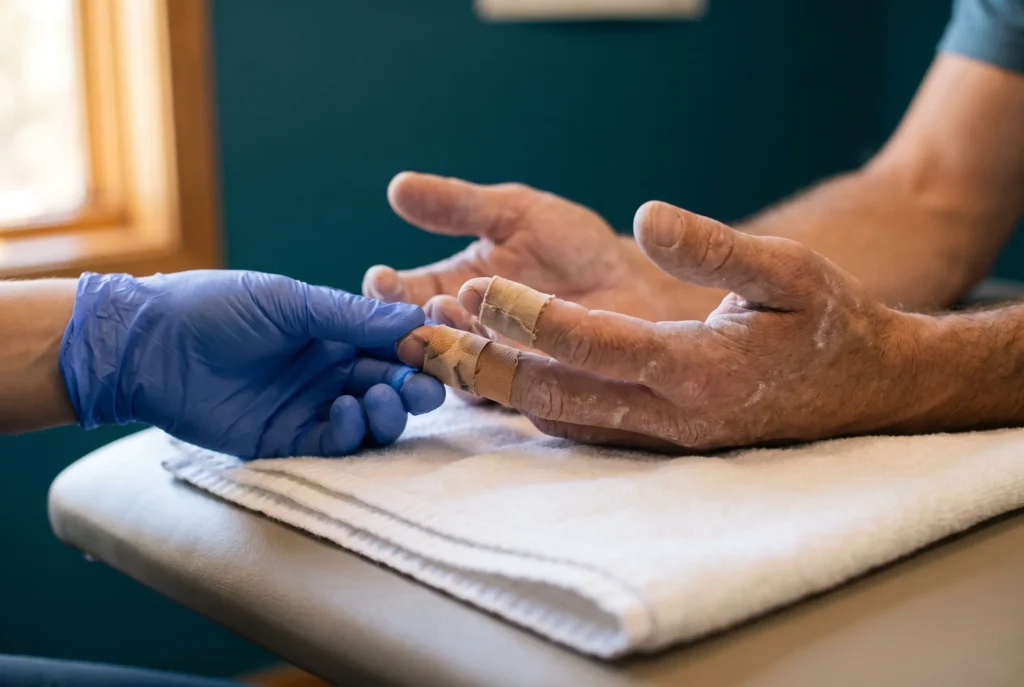
A fast lower, a slip through the belay hand, or a rope running across a forearm on a swinging fall. The skin goes in an instant and it hurts far more than the size of the injury suggests. Rope burn treatment in Railay matters because this is a friction burn with rock dust and rope grit driven into it, in a climate that punishes open wounds.
How they happen
Belaying is the commonest cause — a rope moving faster than expected through a hand that was not braced, usually on a lower rather than a catch.
Then rope across the body: a leg wrapped in slack that pulls tight on a fall, or a forearm the rope drags over on a swing. Beginners get palm burns; experienced climbers get body burns.
Abseiling accounts for a share, particularly on the multi-pitch routes here where people are managing more rope than they are used to, in heat, with sweaty hands.
Why they are not simple grazes
Three things make a rope burn worse than it looks.
Friction generates real heat, so this is a burn as well as an abrasion, and the tissue at the base is damaged rather than merely scraped. Second, rope carries grit, rock dust and chalk, all of which get driven into the wound at speed. Third, it is usually on a palm or forearm, which then keeps being used.
The result is a wound that is dirty at the base, painful out of proportion, and slow to heal — and on this peninsula, one that is going to spend the next week hot and damp.
First aid at the crag
Cool it under clean running water for ten to twenty minutes. That does two jobs: it stops the burn progressing and it begins washing debris out.
Do not use sea water, do not use antiseptic wipes over a dirty wound, and do not put chalk on it, which happens more often than you would believe. Cover it with something clean and come in.
Do not burst blisters. Do not apply any greasy ointment, which traps heat and debris. And do not tape over it and finish the session — the friction of tape on a fresh friction burn makes the next dressing change considerably worse.
What we do at the clinic
Proper cleaning, which is the step that decides the outcome and the one that cannot be done at a crag. Where the wound is dirty and painful, that is done under local anaesthetic so it can be done thoroughly rather than tolerated.
Then assessment of depth, which determines everything after. A superficial burn heals in a week or two with dressings. A deeper one, where the skin is white or leathery rather than red and weeping, needs a different dressing regime and closer review, and occasionally a surgical opinion.
Then a dressing suited to a burn rather than a cut — burns weep considerably and need something absorbent that will not stick to the base — plus tetanus cover if that is out of date, and pain relief that is realistic about how much this hurts.
Dressings, and why daily changes matter here
Rope burns need more frequent dressing changes than most wounds, because they exude a lot in the first few days and a saturated dressing stops protecting and starts incubating.
We do daily changes without an appointment — see wound dressing — and for a hand burn that is worth the walk, because a palm that is repeatedly re-dressed badly heals with tight scar tissue that limits grip.
Keep it dry and out of the sea. That is the unwelcome part of the advice and it is the difference between healing in ten days and healing in a month with an infection along the way.
Infection, and what to watch for
A dirty friction burn in tropical humidity is a genuine infection risk. Come back for spreading redness, increasing pain after day two, discharge or a smell, a red line tracking away, or fever.
Spreading redness is cellulitis and needs antibiotics the same day rather than watching overnight.
A palm wound that becomes swollen and painful to move deserves particular urgency, because there is very little tissue between skin and tendon sheaths in the hand and an infection there does not stay superficial.
Getting back on the rock
Not while it is open, and that is a practical limit rather than a cautious one. Chalk in an open wound, a rope over healing skin, and sweat under tape all reliably reopen it.
A superficial palm burn is usually climbable again in one to two weeks. A deeper one takes longer, and rushing it produces scar tissue that splits repeatedly for months afterwards.
When you do return, tape over intact healed skin rather than over a wound, warm up on easy ground, and expect the new skin to be tender and thin for a while. And review the belay technique that caused it — gloves are not a fashion crime, and most experienced belayers here use them. See climbing injury care.
The longer-term point is worth making as well. Scar tissue on a palm does not stretch the way normal skin does, so a burn that healed badly will keep splitting at the same spot every time you climb hard for months afterwards. Massaging the scar once it has fully closed, and keeping it moisturised rather than letting it dry and crack, genuinely reduces that — it is a dull five minutes a day that decides whether the injury is over in a fortnight or follows you through the rest of the season.
Frequently asked questions
How long does a rope burn take to heal?
A superficial one, one to two weeks. Deeper burns take longer and need closer review.
Should I put chalk on it to dry it out?
No. Chalk in an open wound is grit and bacteria. Cool it under clean running water and cover it.
Can I keep climbing?
Not while it is open. Chalk, rope and sweat under tape all reopen it, and a repeatedly reopened palm heals with tight scar tissue.
Should I burst the blisters?
No. The blister roof is a sterile dressing. If one bursts on its own, come in and have it dressed properly.
Why does it hurt so much for such a small injury?
Because it is a burn as well as an abrasion, and burns involve nerve endings at the base. Palms and forearms are also densely supplied.
Do I need a tetanus jab?
If your last booster was over ten years ago or you cannot remember, yes. Rope and rock grit make this a contaminated wound.
Can I swim with it?
No, not while it is open. Sea water in a fresh friction burn is one of the more reliable ways to get it infected on this coast.
Who treats you here, and who is behind them
The clinic on Railay is run by experienced English-speaking nurses. Behind them sits Doctor Ao Nang Takecare Medical Clinic in Ao Nang, which Takecare Clinic Railay works together with as one service rather than two businesses: shared doctors, shared records, shared treatment plans. In practice that means a doctor is pulled in the moment your case needs one — to review it, to prescribe, or to come across to the peninsula in person. If you later cross to the mainland, whoever sees you is already holding your notes and you are not starting the story again. It also means the second opinion that would otherwise cost you a boat and half a day costs a phone call.
Getting seen
Opening hours are 8am–10pm daily. Outside them we are still reachable 24 hours by phone, WhatsApp and Line, so when something happens at eleven at night the right move is to message us, not to lie awake deciding whether it can wait. No appointment is needed at any point — walk in, or reach us on +66 81 718 9080, WhatsApp or Line. If you would rather not move, ask for a doctor resort visit and we will come to you. And if this turns out to be something the peninsula cannot handle, that call is also how the boat and the hospital transfer start moving.